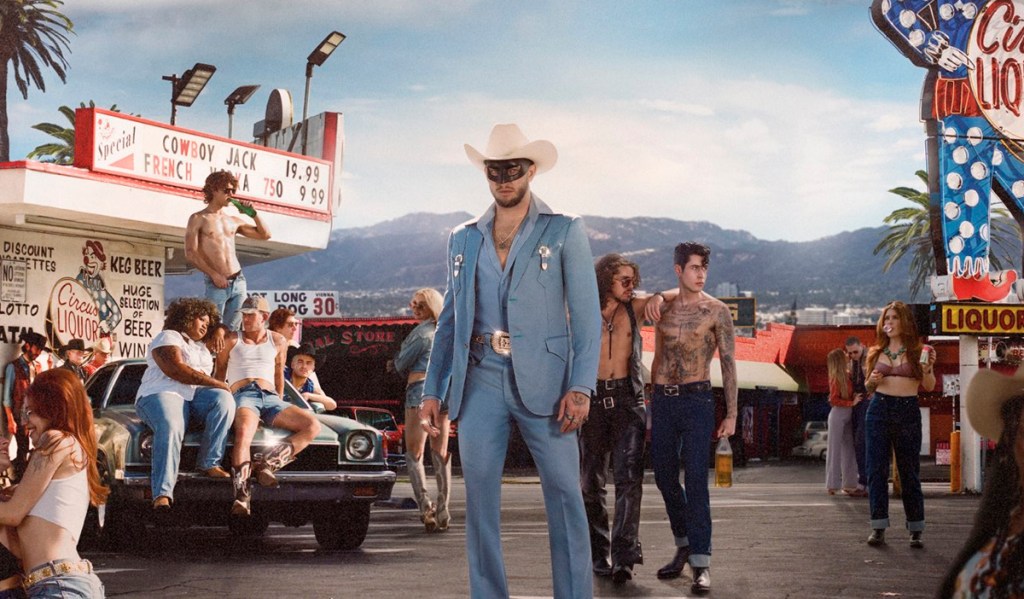
Несколько лет назад Lil Nas X выпустил один из самых больших кантри-хитов в истории и запустил обсуждение, могут ли чёрные (тем более не натуралы) петь кантри. И хоть он сам на это обсуждение получил ответ «нет», в этом году оказалось что мир всё-таки поменял своё мнение. Успех Бейонсе говорит, что раса уже не так важна в этом жанре и что кантри уже вырвалось с юга США к более широкой аудитории. А вот новый альбом Орвилла подсказывает, что ковбоям даже не обязательно быть гетеро. Эти открытия отражены в юмористических текстах на его третьем альбоме Stampede.
Стиль Орвилла основан на классическом кантри, но иногда смешивает его с более танцевальными направлениями или добавляет в жанр немного драмы и театральности. Это видно и по его костюмам, которые словно отправляют ковбоев то ли на карнавал, то ли на прайд.
Вообще Орвилл для меня человек-загадка. В сети можно найти его старые фото, которые мало оставляют дл воображения, но сейчас этот канадец прячется за маской (наверно, Сия подсказала идею), довольно реалистично изображает южный акцент и, несмотря на отсутствие больших хитов, успешно подбирается к мейнстриму. Не знаю, что за знакомые у него есть в индустрии, но после двух инди-альбомов я бы никак не ожидал увидеть такой список гостей на третьей пластинке. А Stampede именно альбом дуэтов, потому что здесь нет ни одной сольной песни.
Начинается всё с дуэта с легендарным Уилли Нельсоном. Cowboys Are Frequently, Secretly Fond of Each Otherв оригинале вышла больше сорока лет назад (а в нулевых уже исполнялась Уилли), но так хорошо подходит Орвиллу, что воспринимается почти как оригинал. Она также напоминает классический хитMama’s Don’t Let Your Babies Grow Up to Be Cowboys, но на этот раз вместо профессии с юмором обсуждает ориентацию и одержимость мужчин сёдлами и сапогами. А самое главное, что это единственный трек на пластинке на эту тему, что делает его особенно запоминающимся и не создаёт ощущения навязывания повесточки.
Ну, ковбой может хвастать о вещах, которые он делал со своими женщинами,
Но те, кто хвастается громче всех, скорее всего квиры.
The Hurtin’ Kind с Midland поддерживает кантри-направление альбома, но треку не хватает причудливости с первого дуэта. Кажется, что основная сила Орвилла в том, как несерьёзно он подходит к жанру. Иногда ему всё-таки удаётся звучать очень убедительно на вполне обычных песнях, как, например, на чувственной Back at Your Door с Дэбби Доусон – боже, какой у неё приятный голос! Или на солнечной Where Are We Now? Но такие треки не так хорошо сочетаются с его образом, как более характерная You’re an A**hole, I Can’t Stand You (And I Want a Divorce) с Марго Прайс.
Ещё одним доказательством, что со слишком «нормальными» песнями Орвилл не особо выгодно звучит, можно считать коллаборацию с Ноа Сайрус. У неё в принципе не хватает харизмы, поэтому она никак не дотянет до уровня сестрички, но вместе у них вышел очень уж невзрачный трек. А ведь она одна из самых известных гостей на пластинке!
Кроме текстов Орвилл пытается встряхнуть кантри необычными аранжировками. Кавер на хит Элтона Джона Saturday Night’s Alright for Fightingс самим Элтоном Джоном не разочаровал, но ещё больше танцевать захочется на диско-кантри треке с Кайли Миноуг и Дипло Midnight Ride. Из-под диско-шара отправляемся в жаркие южные страны на Miénteme – один из моих любимых номеров на альбоме.
Завершается альбом доброй и ностальгичной Rhinestone Cowboy, которая напоминает мне классические треки из 70-х с каких-нибудь телеконцертов.
Послушать альбом целиком на ютубе | споти | apple music
На новом альбоме Орвилл собрался с коллегами, чтобы исследовать границы кантри и смело их пересекать. Эта пластинка должна расширить его фанклуб и подготовить почву для более серьёзных экспериментов на следующей сольной пластинке. Кажется, артист вполне к ним готов. Ставлю 4/5.
English version
A few years ago, Lil Nas X released one of the biggest country hits in history, sparking a debate about whether Black artists (especially those who aren’t straight) could sing country music. Although the initial response seemed to be «no,» this year has shown that the world may have changed its mind. Beyoncé’s success indicates that race is no longer as significant in this genre, and that country music has expanded beyond the American South to reach a wider audience. Meanwhile, Orville Peck’s new album suggests that cowboys don’t necessarily have to be heterosexual either. These revelations are reflected in the humorous lyrics of his third album, Stampede.
Orville’s style is rooted in classic country, but he often blends it with more danceable genres or adds a touch of drama and theatricality. This is also evident in his costumes, which seem to send cowboys either to a carnival or a pride.
Orville Peck is something of an enigma to me. You can find old photos of him online that leave little to the imagination, but now this Canadian artist hides behind a mask (perhaps taking a cue from Sia), adopts a fairly convincing Southern accent, and despite not having any major hits, is steadily making his way into the mainstream. I’m not sure who his industry connections are, but after two indie albums, I certainly didn’t expect to see such a star-studded list of collaborators on his third record. Stampede is truly an album of duets, as there isn’t a single solo track.
It all begins with a cover with the legendary Willie Nelson. «Cowboys Are Frequently, Secretly Fond of Each Other» was originally released over forty years ago (and performed by Willie in the 2000s), but it suits Orville so well that it almost feels like an original recording. The song also brings to mind the classic hit «Mama’s Don’t Let Your Babies Grow Up to Be Cowboys,» but this time, instead of discussing the profession, it humorously explores the orientation and obsession of men with saddles and boots. Most importantly, it’s the only track on the album that tackles this topic, making it particularly memorable without giving the impression of pushing an agenda.
Well, a cowboy may brag about things that he’s done with his women
But the ones who brag loudest are the ones that are most likely queer
«The Hurtin’ Kind,» featuring Midland, keeps the country vibe going but lacks the quirks of the first duet. It seems that Orville’s strength lies in how he doesn’t take the genre too seriously. Sometimes he manages to sound very convincing on more conventional songs, like the sensual «Back at Your Door» with Debbie Dawson—my goodness, what a lovely voice she has!—or the sunny «Where Are We Now?» However, these tracks don’t align as well with his persona as the more characteristic and humorous «You’re an A**hole, I Can’t Stand You (And I Want a Divorce)» with Margo Price.
Another example of how Orville doesn’t shine as brightly on overly «normal» songs is his collaboration with Noah Cyrus. She generally lacks charisma, resulting in a rather bland track. And yet, she’s one of the most well-known guests on the album!
In addition to the lyrics, Orville tries to shake up country music with unusual arrangements. His cover of Elton John’s «Saturday Night’s Alright for Fighting,» featuring Elton John himself, doesn’t disappoint, but the real dance floor action comes with the disco-country track «Midnight Ride» with Kylie Minogue and Diplo. From under the disco ball, we head to the hot southern lands with reggaeton-inspired «Miénteme»—one of my favorite tracks on the album.
The album closes with the sweet and nostalgic «Rhinestone Cowboy,» which reminds me of classic 70s tracks from televised concerts.
On his new album, Orville teams up with fellow artists to explore and boldly cross the boundaries of country music. This record should expand his fan base and lay the groundwork for more serious experimentation on his next solo project. It seems the artist is more than ready for that. I’d give this album a 4 out of 5.
 Zimowski Journal